How Property Tax Proration Works
Property tax proration divides the annual tax bill between the buyer and seller based on how many days each party owned the property during the tax year. According to the Consumer Financial Protection Bureau (CFPB), the seller pays for the days they owned the home from January 1 through the day before closing, and the buyer pays for the remaining days from closing through December 31.
According to the CFPB, this calculation is standard in virtually every residential real estate transaction and appears on the closing disclosure (which replaced the HUD-1 settlement statement under the TILA-RESPA Integrated Disclosure rule in 2015). The proration is typically handled by the closing agent or title company, but understanding the math helps you verify that the amount is correct.
The Daily Rate Method
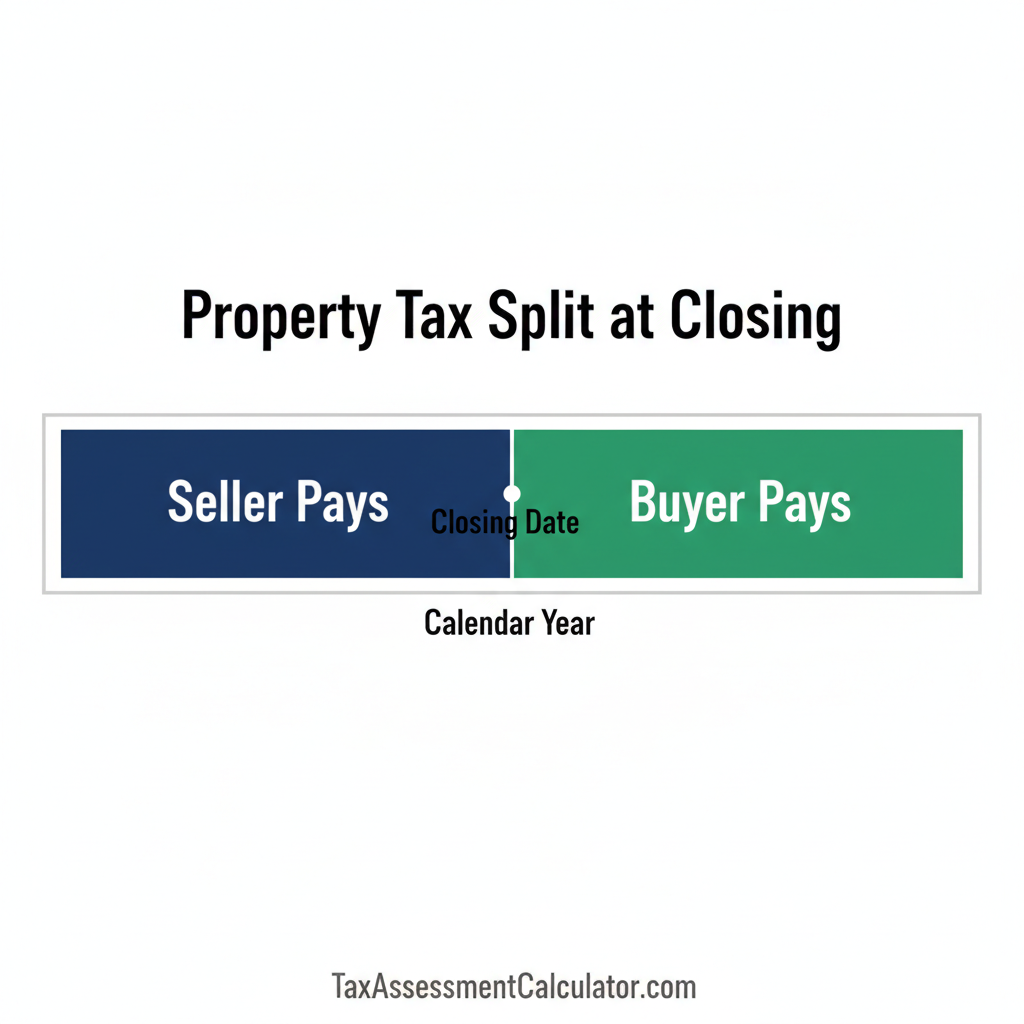
According to the American Land Title Association (ALTA), the most common proration method divides the annual tax by the number of days in the year (365 or 366 for leap years) to get a daily rate. Each party's share is then calculated by multiplying the daily rate by their number of ownership days.
For example, on a $4,500 annual tax bill with a July 15 closing: the daily rate is $12.33 ($4,500 ÷ 365). The seller owned for 195 days (January 1 through July 14), owing $2,404. The buyer owned for 170 days (July 15 through December 31), owing $2,096.
Calendar Year vs. Fiscal Year
According to the Lincoln Institute of Land Policy, most states operate on a calendar year for property tax purposes (January 1 through December 31), which is what this calculator uses. However, some jurisdictions use a fiscal year — typically July 1 through June 30.
According to state comptroller offices, states that commonly use a fiscal year for property tax billing include parts of California (where the fiscal year runs July 1 through June 30, per the California State Board of Equalization), New York, and several New England states. If your closing is in one of these jurisdictions, verify which tax year applies and adjust accordingly.
Proration at Closing: What to Expect
According to the CFPB's closing disclosure guide, the proration amount appears as either a credit or debit on the closing disclosure. If the seller has already paid the full year's property tax, they receive a credit from the buyer for the buyer's share. If taxes haven't been paid yet, the seller provides a credit to the buyer for the seller's share, which the buyer then uses toward the full tax payment when it comes due.
According to the National Association of Realtors (NAR), buyers should pay close attention to whether the proration is based on the current year's actual tax bill or an estimate based on the prior year. If the property was recently reassessed — which is common after a sale in many states — the actual tax bill may differ significantly from the prorated estimate, potentially resulting in a shortfall in the buyer's escrow account.